Wind-Driven Kinetic Facade: Step-by-Step Process from Design to Installation

Introduction
Wind has always been one of nature's most powerful design forces. In architecture, it is often considered a challenge that buildings must resist. But what if wind could become an integral part of a building's design rather than its enemy?
This is the philosophy behind a wind-driven kinetic facade.
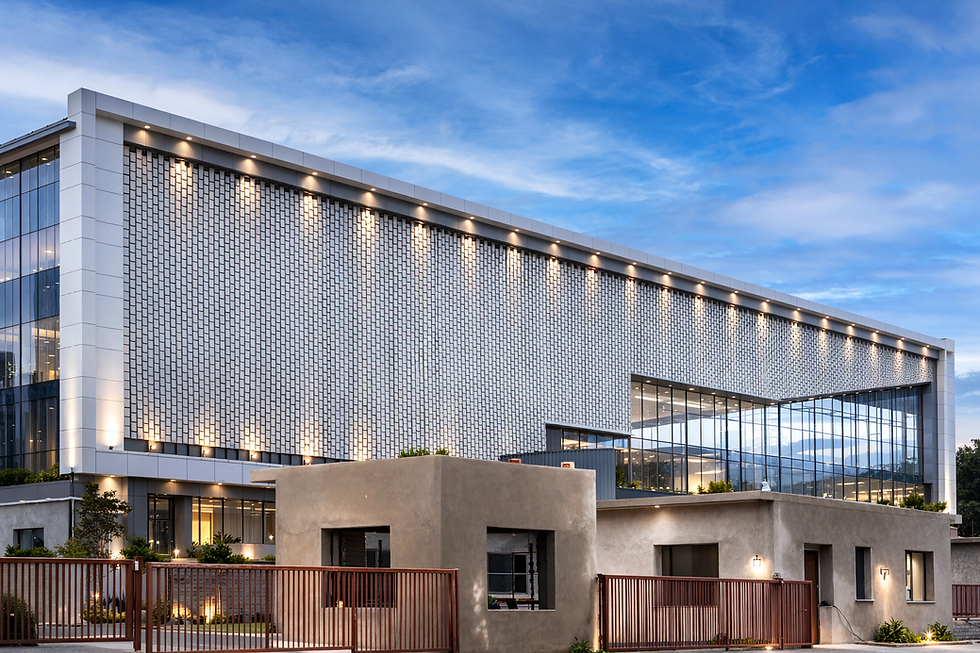
Unlike motorized kinetic systems that rely on electricity and automation, wind-driven facades harness natural airflow to create dynamic movement. The result is a façade that is visually captivating, energy-efficient, low maintenance, and constantly changing with its environment.
However, achieving this seemingly effortless movement requires months of engineering, precision manufacturing, testing, and installation.

At Dexxta Design, every wind-driven kinetic facade is engineered as a complete system—not simply manufactured as decorative panels. Every bracket, pivot, bearing, and moving element is designed specifically for each project to ensure smooth movement, structural safety, and long-term durability.
This article explains the complete journey of a wind-driven kinetic facade—from the first architectural sketch to the final installation on-site.
1. Understanding the Project Vision
Every project begins with understanding the architect's vision.
Unlike conventional cladding systems, a kinetic facade must satisfy both architectural and engineering objectives.
During the initial stage, several important questions are answered:
What story should the facade tell?
What level of movement is desired?
Should the movement be subtle or dramatic?
How visible should the kinetic effect be from different viewpoints?
What climatic conditions will the building experience?
A commercial headquarters may require elegant, restrained movement, while a museum or public landmark may call for a highly expressive façade that becomes an attraction in itself.
This phase establishes the design direction before engineering begins.
2. Site Analysis & Wind Study
A wind-driven kinetic facade depends entirely on environmental conditions.
Unlike motorized systems, movement cannot be forced—it must be engineered around natural wind behaviour.
A detailed site analysis evaluates:
Prevailing wind directions
Average wind speed
Seasonal wind variations
Turbulence around nearby buildings
Building orientation
Height above ground
Even two buildings in the same city can experience very different wind patterns.
Wind studies help determine:
Panel size
Panel weight
Pivot locations
Required balancing
Expected movement frequency
Proper wind analysis ensures that panels respond naturally without excessive vibration or unwanted noise.
3. Concept Design
Once environmental data is available, designers begin developing the kinetic concept.
This includes:
Panel geometry
Module dimensions
Repeating patterns
Visual rhythm
Opening percentages
The objective is not merely to create movement.
It is to create controlled movement.
Architects often explore several concepts before selecting the final visual language.
4. Parametric Design & Digital Simulation
Unlike conventional facades, wind-driven systems benefit greatly from computational design.
Parametric modelling allows designers to:
Generate thousands of panel variations
Simulate movement
Study sunlight behaviour
Optimize material usage
Maintain consistent spacing
Digital simulations help predict how the façade will appear throughout the day under changing wind conditions.
Rather than relying on guesswork, design decisions become data-driven.
5. Structural Engineering
Now the engineering process begins.
Every moving component introduces additional structural considerations.
Engineers calculate:
Dead loads
Wind loads
Dynamic forces
Fatigue cycles
Deflection limits
The supporting structure must resist movement while allowing the panels to move freely.
This stage ensures long-term structural safety.
6. Mechanical Design of the Movement System
The heart of a wind-driven kinetic facade lies in its movement mechanism.
Unlike decorative installations, architectural systems must continue operating reliably for years.
Mechanical engineers develop:
Pivot systems
Bearings
Bushes
Counterweights (where required)
Rotation limits
Stopper mechanisms
Connection brackets
Every component is designed to minimise:
Friction
Wear
Noise
Maintenance
Small improvements in mechanical design often have a significant impact on long-term reliability.
7. Material Selection
Material selection directly affects both movement and durability.
Common materials include:
Aluminium
Lightweight
Corrosion resistant
Excellent for coastal environments
Stainless Steel
Higher strength
Premium finish
Heavy-duty applications
Mild Steel
Economical
Suitable with protective coatings
The final choice depends on:
Climate
Structural requirements
Desired finish
Budget
Surface treatments such as powder coating or anodizing further improve weather resistance.
8. Prototype Development
Before manufacturing hundreds or thousands of panels, a prototype is produced.
Prototype testing evaluates:
Smoothness of movement
Wind responsiveness
Visual appearance
Noise generation
Mechanical wear
Manufacturing tolerances
Many improvements are introduced during this phase.
Prototype development significantly reduces risk during full-scale production.
9. Precision Manufacturing
At Dexxta Design, manufacturing goes far beyond cutting and assembling panels.
Every project involves precision fabrication of custom components, including:
Aluminium panels
Mounting brackets
Pivot assemblies
Structural frames
Connection hardware
Bearings and rotating elements
Since all parts are manufactured in India, projects benefit from:
Faster production
Complete customization
Better quality control
Easier future maintenance
Precision manufacturing ensures that every moving module performs consistently across the entire façade.
10. Quality Inspection
Every component undergoes inspection before dispatch.
Typical checks include:
Dimensional accuracy
Coating quality
Rotation smoothness
Fastener inspection
Assembly verification
Because movement depends on precision, quality control is critical.
Even minor deviations can affect the performance of the entire system.
11. Packaging & Logistics
Moving components require careful packaging.
Panels are protected against:
Surface scratches
Moisture
Impact damage
Transportation vibration
Each component is labelled for efficient installation.
Proper logistics planning minimizes site delays.
12. Site Preparation
Before installation begins, the supporting structure is inspected.
Engineers verify:
Alignment
Structural dimensions
Anchor locations
Tolerance limits
Any errors are corrected before the kinetic modules arrive.
13. Installation
Installation is carried out in a carefully planned sequence.
The process generally includes:
Structural frame installation
Alignment verification
Mounting of kinetic modules
Bearing installation
Panel fixing
Movement testing
Final adjustments
Installation requires both structural expertise and mechanical precision.
14. Testing & Commissioning
Before project handover, the entire façade undergoes testing.
Checks include:
Free movement
Noise levels
Wind response
Panel clearances
Fastener security
Visual consistency
Only after satisfactory performance is the project commissioned.
15. Maintenance & Long-Term Performance
One of the biggest advantages of wind-driven kinetic facades is their simplicity.
Since they do not rely on motors or electronics, maintenance requirements are significantly lower.
Typical maintenance involves:
Periodic inspection
Cleaning
Fastener checks
Bearing lubrication (if applicable)
Component replacement after years of service, if required
With proper engineering and quality materials, wind-driven systems can provide reliable performance for many years.
Why Precision Matters
People often see only the moving panels.
What they don't see are hundreds of engineered decisions behind every movement.
From wind studies and structural calculations to precision bearings and manufacturing tolerances, every stage contributes to the success of the system.
A beautifully moving façade is not the result of chance—it is the result of engineering.
Why Choose Dexxta Design?
At Dexxta Design, we design and manufacture complete wind-driven kinetic facade systems rather than supplying individual components.
Our approach combines:
In-house design and engineering
Precision manufacturing in India
Fully customized mechanisms
Project-specific material selection
Prototype validation
End-to-end support from concept to installation
Every bracket, connector, pivot, and moving panel is developed specifically for your project, ensuring superior performance, reliability, and architectural impact.
Conclusion
A wind-driven kinetic facade is much more than an architectural feature—it is a carefully engineered system that transforms natural wind into movement, creating buildings that are dynamic, sustainable, and memorable.
From concept development and wind analysis to precision manufacturing and installation, every stage plays a vital role in ensuring long-term performance.
When each process is executed with precision, the result is not just a moving facade—it is a living architectural experience that evolves with nature while delivering lasting value for architects, developers, and building owners.


Comments