Why a Kinetic Facade Is Not Just a Panel — Understanding the Real Cost Behind the System
- Dexxta Design

- Apr 8
- 3 min read
Kinetic Facade : The Biggest Misconception
When most people first encounter a kinetic facade, they see movement… patterns… a visually dynamic skin.
And naturally, the first question becomes:
👉 “What is the cost per square foot?”
But this is where the misunderstanding begins.
A kinetic facade is not a panel, not a cladding system, and not a decorative add-on.
It is a fully engineered, multi-disciplinary system—where architecture, mechanical engineering, material science, and automation come together.
And the cost?It reflects everything working together seamlessly.
1. A Kinetic Facade Is a System, Not a Surface
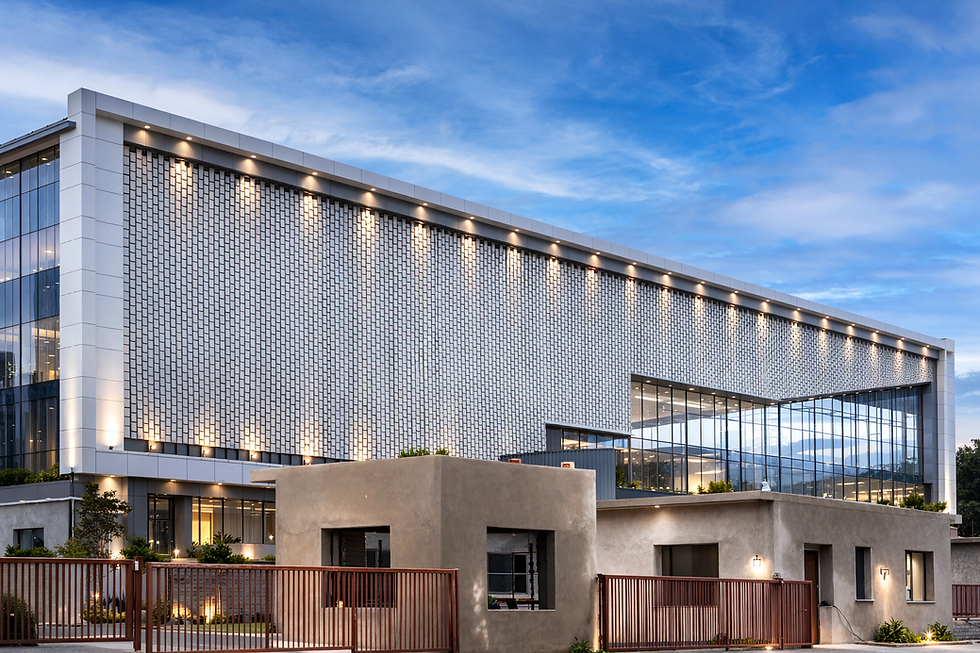
Unlike traditional facades that are largely static and material-driven, a kinetic facade is:
Designed to move
Engineered to respond
Built to perform over time
Every panel you see is just the visible output of a deeper system that includes:
Structural frameworks
Mechanical movement systems
Bearings, pivots, and linkages
Environmental response logic
Fabrication precision
👉 In simple terms:You’re not buying panels—you’re investing in performance.
2. The Stakeholders Behind a Well-Engineered Kinetic Facade
A successful kinetic facade is never the result of a single vendor.It is the outcome of coordinated expertise.
🧠 Design & Parametric Thinking
Architects and computational designers define:
Movement patterns
Geometry logic
Visual identity
⚙️ Engineering & Mechanism Development
Mechanical and structural engineers ensure:
Smooth movement
Load handling (especially wind loads in India)
Long-term durability
🏭 Precision Manufacturing
This is where theory becomes reality.
At Dexxta Design, every component is:
Custom-designed
Precision-fabricated
Manufactured in India
This includes:
Brackets
Linkages
Frames
Moving modules
👉 Unlike imported systems, this allows:
Better control over quality
Faster iteration
Complete customization
🔌 Automation & Control Systems
For active facades:
Sensors (sun, wind, temperature)
Motor systems
Control logic
These transform a facade into a responsive architectural skin.
🏗️ Installation & Execution
Even the best design can fail without proper installation.
Alignment precision
Structural integration
On-site calibration
👉 This stage defines whether the facade performs—or fails.
3. Why Precision Manufacturing Changes Everything
One of the biggest challenges in kinetic facades is tolerance.
Even a few millimeters of error can:
Disrupt movement
Create noise
Increase wear and tear
This is where Dexxta Design positions itself differently.
🔩 Fully Custom, Made-in-India Components
No off-the-shelf compromises
Designed for Indian climate conditions
Built for dust, heat, and monsoon exposure
🎨 Unmatched Customization
Multiple material options (aluminium, steel, composites)
Wide range of finishes (anodized, powder-coated, textured)
Parametric design adaptability
🇮🇳 Localized Manufacturing Advantage
Reduced dependency on imports
Faster lead times
Better service & maintenance support
👉 This is critical for long-term system reliability.
4. The Process Defines the Performance
A kinetic facade is only as good as its process.
Step-by-step reality:
Concept & feasibility
Parametric design development
Engineering validation
Prototype testing
Precision fabrication
Installation & calibration
Performance tuning
👉 Skipping or compressing any of these stages leads to:
System failures
Increased maintenance
Poor client experience
5. Why Cost Cannot Be Compared Like Traditional Facades
A static facade is priced based on:
Material
Finish
Installation
A kinetic facade, on the other hand, includes:
Design intelligence
Engineering complexity
Moving components
Long-term performance
👉 That’s why comparing it with ACP, glass, or louvers is misleading.
It’s similar to comparing:
A machine vs a material
6. The Role of Material & System Choice
The final cost varies depending on:
Passive vs motorized systems
Complexity of movement
Scale of the facade
Level of customization
Material selection
At Dexxta Design, clients have the flexibility to:
Optimize cost through smart design
Choose performance-based materials
Customize systems based on project goals
7. Long-Term Value Over Initial Cost
A well-designed kinetic facade delivers:
Reduced heat gain → lower HVAC costs
Dynamic building identity → higher asset value
User engagement → better commercial appeal
👉 It becomes a functional asset, not just a visual feature.
8. A Practical Cost Perspective (India, 2026)
Instead of looking at fragmented pricing, it’s better to understand a complete system cost range.
👉 In the Indian context:
Basic wind-driven systems
Mid-level kinetic systems
Highly customized automated facades
The range depend heavily on:
Design complexity
System type
Engineering depth
Conclusion
A kinetic facade is not something you “apply” to a building.
It is something you engineer into it.
And that’s why its cost is not just about material—it’s about:
Precision
Process
Performance
At Dexxta Design, the focus is clear:
Delivering high-performance kinetic facade systems throughin-house precision manufacturing, deep customization, and engineering excellence—made in India.
Final Thought
“If you see a kinetic facade as a panel, it will feel expensive.If you understand it as a system, it becomes invaluable.”


Comments