How Kinetic Facades Reduce Energy Consumption in Modern Buildings
- Dexxta Design

- Jan 8
- 4 min read
In a world facing rising energy costs and increasingly extreme climates, building performance is no longer a luxury — it’s a necessity. Architects and engineers are constantly seeking ways to cut energy use, enhance comfort, and reduce operational costs. One of the most effective and elegant solutions emerging in contemporary architecture is the kinetic façade — a building envelope that actively adapts to its environment to optimize energy use.
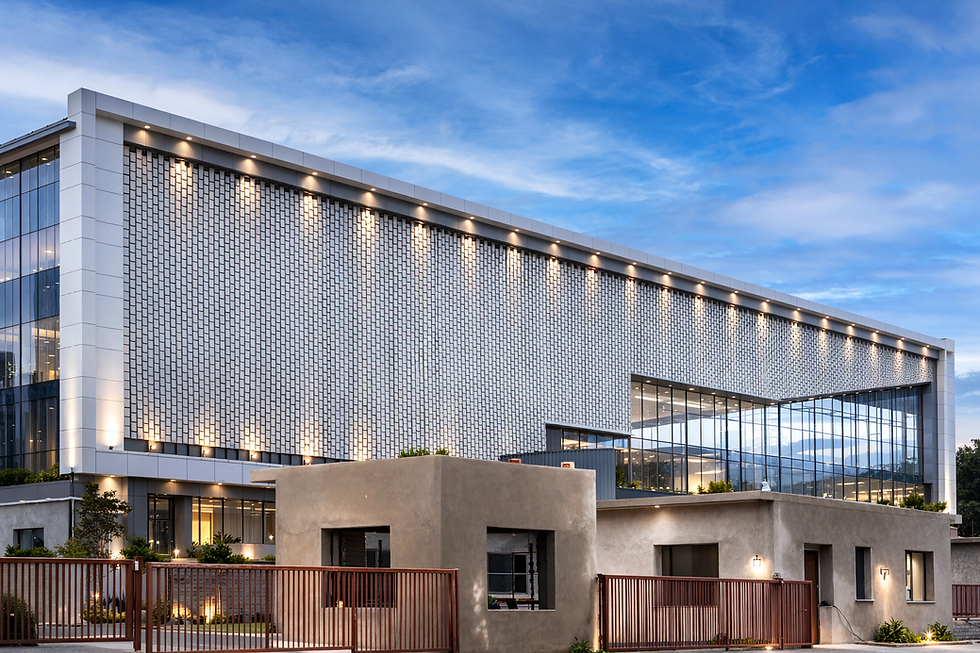
Among the innovators in this field, Dexxta Design stands out for its wind-driven kinetic facades, which harness natural forces without relying on motors or electrical input, bringing sustainability and performance together in a seamless architectural expression. Dexxta Design

What Is a Kinetic Façade?
A kinetic façade is a building envelope system composed of elements — such as panels, flaps, louvers or modules — that can move or adjust their configuration in response to environmental conditions like sunlight, wind and temperature. Unlike static facades, kinetic designs are dynamic, enabling buildings to interact with their surroundings. SES Journal
At Dexxta Design, the focus is on wind-driven kinetic systems — façades engineered so that movement is powered entirely by wind, eliminating the need for electrical actuators or motors. This not only reduces operational energy but also aligns with passive, climate-adaptive design principles. Dexxta Design
1. Dynamic Solar Shading — Lower Cooling Loads
One of the biggest energy drains in buildings — especially in warm climates — is air conditioning. Heat entering through glazed facades forces HVAC systems to work harder, increasing energy use.
Kinetic facades mitigate this by adapting in real time to solar conditions:
Movable elements can close or adjust during peak sun hours to reduce solar heat gain.
When sun angles change, the façade reconfigures to balance shading and daylight. facadetoday.com
Many studies show that properly designed kinetic shading can significantly reduce cooling loads. For example, adaptive façade configurations in educational buildings demonstrated up to ~29% lower energy consumption compared to static solutions, while improving visual and thermal comfort. ScienceDirect
In Dexxta Design’s wind-driven systems, the façade’s panels naturally orient with prevailing winds to create shading exactly when and where it’s needed. This passive response minimizes excess solar gain without consuming energy. Dexxta Design
2. Enhanced Natural Ventilation and Passive Cooling
Facades that can open, tilt or adjust also improve airflow and ventilation:
Dynamic openings promote cross-ventilation, pushing hot air out and drawing cooler air in.
This reduces reliance on mechanical ventilation and air-conditioning, lowering electricity consumption. AntiCAD
With Dexxta’s wind-driven kinetic panels, wind pressure itself facilitates this movement, enabling continuous passive ventilation that responds to real environmental cues rather than scheduled programming. Dexxta Design
3. Optimized Daylight — Less Artificial Lighting
Kinetic façades also help balance daylight penetration, reducing artificial lighting loads:
During bright daylight, shading elements adjust to filter glare while allowing diffuse light indoors.
When light levels fall, the façade can allow more openness, maximizing natural illumination. Archova Visuals
This adaptability means spaces stay well-lit naturally for longer periods — reducing energy consumption from lighting systems.
4. Adaptability Across Seasons and Orientations
Static façade systems are designed for average conditions, which often means compromising on performance at critical times.
Kinetic systems — whether wind-driven or sensor-controlled — provide real-time adaptability:
In cold seasons, façades can open up to allow sunlight to help heat interiors.
In hot periods, closer configurations reduce heat gain. MDPI
This seasonal adaptability results in lower overall energy use year-round, improving occupant comfort and reducing carbon footprint.
5. Building Identity Meets Efficiency
Some kinetic façade case studies, like the Al Bahr Towers in Abu Dhabi, combine aesthetic innovation with performance — reducing energy use by significant margins while making a visual statement. archidust.com
Dexxta Design’s wind-driven kinetic facades similarly elevate architectural expression — the façade itself becomes a living interface with nature, blending beauty with measurable energy performance. Dexxta Design
Real Performance — What the Research Says
Several academic and industry analyses quantify the impact:
Kinetic shading has been shown to reduce cooling and heating energy use by over 30% compared to static facades. bspace.buid.ac.ae
Adaptive facades in educational buildings achieved about 26–29% reductions in energy consumption while improving comfort. ScienceDirect
Smart kinetic systems can cut energy needs by up to 35% compared to conventional envelopes. researchintelo.com
These figures illustrate how responsive façades translate into real, measurable energy savings, especially in climates with high solar exposure and temperature swings.
Conclusion
Kinetic facades are much more than an architectural trend — they are a strategic response to energy challenges in building design. By dynamically adapting to their environment, kinetic systems:
✅ Reduce cooling and lighting energy demands ✅ Enhance natural ventilation and comfort ✅ Respond passively to wind and climate conditions ✅ Lower reliance on mechanical systems
And when engineered as wind-driven systems — like those from Dexxta Design — they do all this without consuming a single watt of electricity for actuation, making them one of the most sustainable façade technologies available today.


Comments